From Remembrance to Impact: Financial Recovery Services Gives Back on 9/11
Community engagement has long been a cornerstone of responsible leadership within the accounts receivable management industry. As agencies navigate increasing regulatory complexity, workforce challenges, and shifting consumer expectations, meaningful service outside the office has become a powerful way to reinforce trust, unity, and shared purpose. Financial Recovery Services, Inc. (FRS) continues to demonstrate how community involvement strengthens not only neighborhoods, but the industry itself.
In September 2025, FRS team members participated in a hands-on volunteer initiative in St. Paul, Minnesota, packaging meals intended to support local communities in need. The effort reflects a broader commitment to ethical leadership, collaboration, and values-driven action. The principles that align closely with the mission of RMAI and its emphasis on certification, professionalism, and community building.
Leadership Participation Sets the Tone
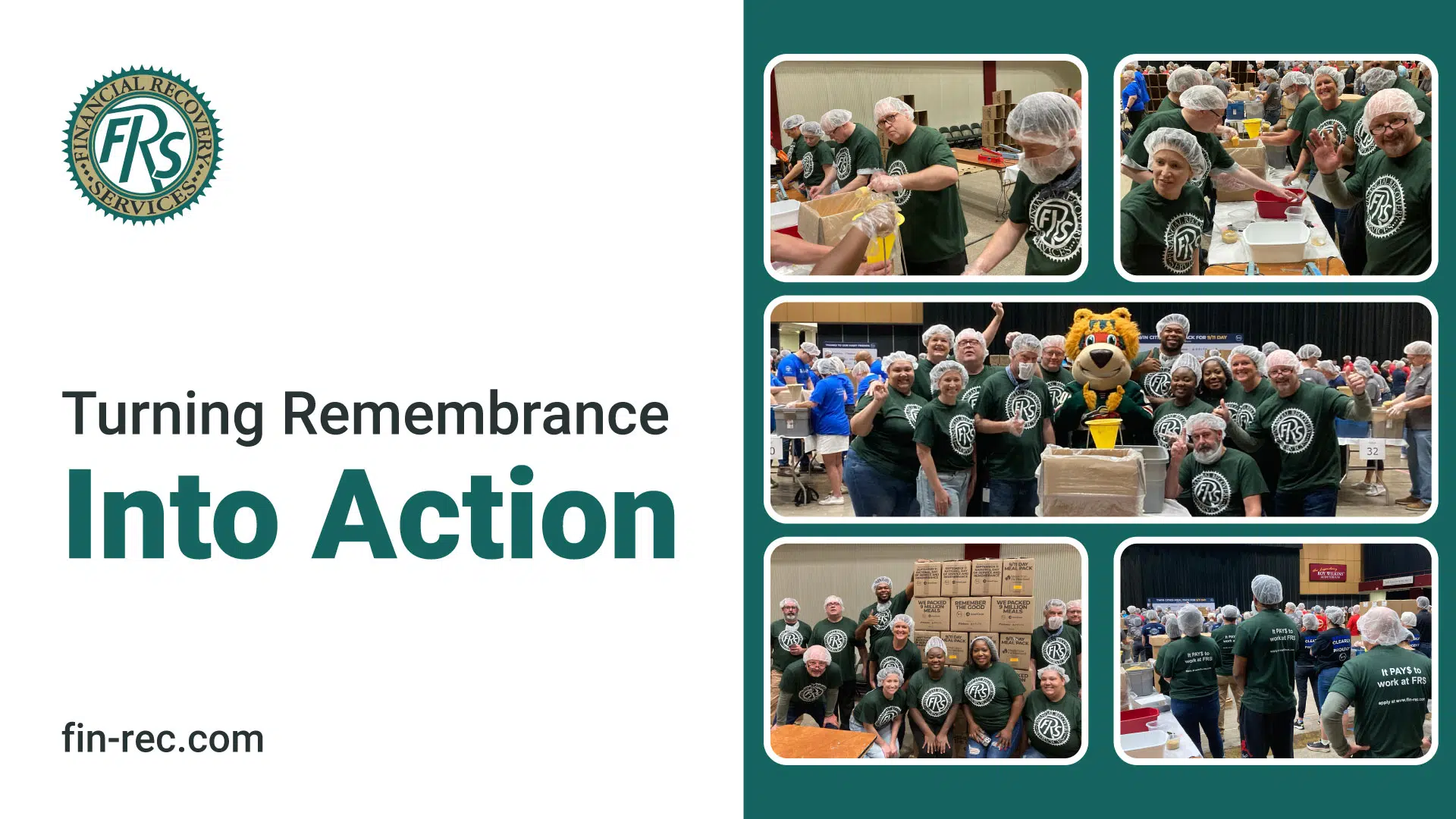
One of the most meaningful aspects of the initiative was leadership participation. CEO, Brian Bowers and Co-Founder Wade Davis volunteered alongside team members, reinforcing the idea that service is not delegated but shared.
When executive leadership actively engages in community service, it sends a clear message: responsibility extends beyond operational performance. It becomes part of company culture. According to Brian Bowers, community involvement is an extension of how FRS approaches business every day: through accountability, empathy, and integrity.
By participating directly, leadership reinforces values that resonate throughout the organization and align with RMAI’s Certified Receivables Business (CRB) principles, which emphasize ethical conduct, consumer respect, and professional excellence.
Turning Industry Values Into Action
The volunteer event took place on the morning of September 11, 2025, at the Roy Wilkins Auditorium in St. Paul as part of 9/11, the federally recognized National Day of Service and Remembrance. Established by nonprofit leaders in 2002 and formally recognized by Congress in 2009, 9/11 Day transforms the anniversary of the September 11 attacks into a nationwide call to unity and service. Twelve FRS volunteers worked together to package approximately 200 meals, with participants informed that the meals would remain local and support Minnesota communities facing food insecurity. In addition to volunteering, Financial Recovery Services served as an event sponsor, contributing a promotional board and reinforcing its commitment to honoring remembrance through meaningful action.
While the number of meals is meaningful, the broader impact lies in collective action. The initiative demonstrates how agencies can translate compliance-focused values into real-world engagement that benefits the communities they serve.
For an industry often defined by metrics and outcomes, community service provides a reminder that people and not processes, remain at the center of responsible collections.
Why Community Engagement Matters in Today’s ARM Landscape
The receivables industry continues to face evolving expectations from regulators, consumers, and business partners. Certification programs and compliance frameworks provide structure, but community engagement adds dimension.
Participation in service initiatives:
- Strengthens internal culture and morale
- Reinforces ethical leadership principles
- Builds trust with consumers and communities
- Supports industry-wide credibility
Organizations that invest in their communities often see the benefits reflected internally, from improved employee engagement to stronger alignment with professional standards.
Aligning Service With Certification and Professionalism
RMAI’s certification programs underscore the importance of leadership, accountability, and ethical operations. Community engagement initiatives like this one reinforce those ideals in tangible ways.
By participating in service efforts, agencies demonstrate that compliance is not simply about meeting requirements, it is also about contributing positively to the environments in which they operate.
Financial Recovery Services’ involvement highlights how certified organizations can extend their commitment beyond internal audits and training, fostering goodwill and shared responsibility.
A Model for Industry-Wide Participation
The success of this initiative serves as a reminder that community building does not require large-scale programs to be impactful. What matters most is consistency, participation, and leadership involvement.
As agencies look ahead to future challenges, community engagement offers a path toward resilience. When professionals come together outside traditional business settings, they build relationships that strengthen the industry as a whole.
Learn more about Financial Recovery Services’ commitment to ethical leadership and community engagement at https://www.fin-rec.com, and follow the company’s ongoing initiatives on LinkedIn.